How Digital Entertainment Platforms Are Blurring the Line Between Gaming and Social Media
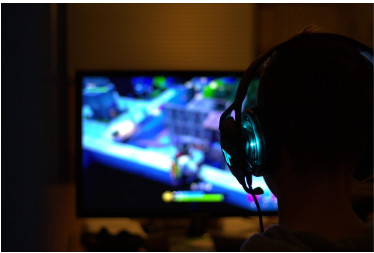
Digital entertainment has shifted from something people consume alone to something they experience together. Games are no longer just about mechanics or progression. Now, they’re places where people talk, watch, perform, and build identity. At the same time, social media platforms increasingly borrow the language of games.
This convergence is by no means accidental. It reflects how modern audiences expect entertainment to work. They want interaction, visibility, and a sense of presence, even when they’re not actively playing or creating.
The result is a growing overlap where gaming and social media feel less like separate categories and more like variations of the same experience.
Games as Social Platforms
Many modern games are designed with social behaviour at their core. Multiplayer modes, shared hubs, and live events are not side features. In fact, they’re the main attraction. So, players don’t just log in to progress, but to see who else is there, what’s happening, and how they fit into the wider community.
This is why platforms like Discord and Twitch have become inseparable from gaming culture. They extend experience beyond the game itself, turning play into an ongoing social loop. As a result, watching, chatting, reacting, and sharing clips have become as important as playing.
In this environment, time spent “around” the game often outweighs time spent in it. That means engagement is frequently measured less by wins or losses and more by presence and participation.
Where Cultural and Regulatory Context Shapes the Blur
While the convergence of gaming and social media feels global, it doesn’t unfold the same way everywhere. Cultural expectations and regulatory frameworks shape how far platforms can push monetisation, visibility, and social interaction.
In some regions, entertainment platforms operate under tighter constraints, particularly when money, competition, and public interaction intersect.
For example, discussions around online gambling in Saudi Arabia often highlight how digital entertainment models are adapted, limited, or reframed to align with local norms and laws. This creates a different kind of boundary between play, social interaction, and financial systems.
These differences matter because they show that the gaming-social media blur isn’t purely a design trend. It’s also a reflection of what is culturally acceptable, legally permitted, and socially encouraged in different markets.
Identity, Status, and Performance in Shared Spaces
As games and social platforms converge, they increasingly function as stages for identity. Avatars, usernames, cosmetic items, and visible achievements act as signals. These signals communicate experience, taste, and belonging to others in the same space.
This mirrors the power of social validation on social media platforms, where likes, follows, and comments influence how people perceive value and status. Games adopt similar mechanics through ranks, badges, and rare items that are designed to be seen and recognised. The reward isn’t just progress, but acknowledgement.
In shared environments, visibility amplifies meaning. An achievement matters more when it’s noticed, and a cosmetic upgrade carries weight because it signals commitment or skill to others.
Over time, participation becomes performative, not in a shallow sense, but as a response to systems that reward recognition. So, entertainment shifts from private satisfaction to shared affirmation, reinforcing why social presence now sits at the centre of digital play.
Algorithms, Feeds, and the Gamification of Attention
In both gaming and social media, algorithms act as the invisible game master. Feeds decide what’s surfaced, who is seen, and which actions are rewarded with attention. On social platforms, this shows up as reach, visibility, and engagement spikes. In games, it appears through matchmaking, event timing, and personalised challenges.
What connects these systems is feedback. Actions are observed, ranked, and responded to, often in ways that encourage repetition. Players and users learn, sometimes subconsciously, which behaviours are worth repeating because the system responds favourably.
This dynamic turns attention into a reward loop of its own. Posting, reacting, logging in, or completing tasks becomes less about intrinsic enjoyment and more about staying visible within the system.
When designed carefully, this can support discovery and community. When overused, it risks turning participation into performance driven by metrics rather than meaning.
Monetisation Without the Hard Sell
One of the more subtle shifts in modern entertainment is how monetisation is woven into social interaction rather than positioned as a separate transaction. This is known as front-end monetisation, where purchases are framed as participation. It may involve things like unlocking access, speeding up interaction, or enhancing presence.
Social platforms use this logic to ensure that spending feels like a natural extension of the user experience. As highlighted in research on monetised socialisation on WeChat, monetisation isn’t just an add-on. Instead, it’s “unfolded” into the social ritual itself, transforming money into a medium for cultural gifting and social play.
Gaming platforms adopt comparable systems, offering optional paths that feel like personal choices rather than obligations. The approach works because it aligns spending with identity and time, not pressure. When users understand what they’re paying for and how it affects their experience, monetisation feels less like a barrier and more like a form of self-expression.
Wrapping Up: When Entertainment Becomes a Social Layer
The line between gaming and social media continues to blur because both now serve the same purpose. Namely, creating shared spaces where people spend time together. Mechanics, feeds, chats, and rewards are simply different tools used to sustain attention and connection.
What matters most is not the format, but the function. Platforms that succeed treat entertainment as a social layer, shaped by culture, context, and trust. As these systems evolve, the distinction between playing, watching, and participating will matter less than how clearly platforms respect the people who choose to spend their time there.